Aligned
Crafting a product to give makers back their afternoons
Ask a maker what a meeting costs and they’ll tell you it’s the whole afternoon. Ask a manager what a meeting is for and they’ll tell you it’s the only place work actually gets tracked. Both are right. Serve only makers and you’ve built a calendar blocker. Serve only managers and you’ve built a task tracker.
I founded Aligned to help address this issue. I ran the research, designed the product and the brand, hired engineering help, and shipped it as a Chrome extension layered over Google Calendar. Twenty in-person interviews in 2019 surfaced two needs in direct tension: makers need protected, uninterrupted time. Managers need a reliable way to assign and track what came out of a meeting.
User ResearchProduct Strategy
The Card
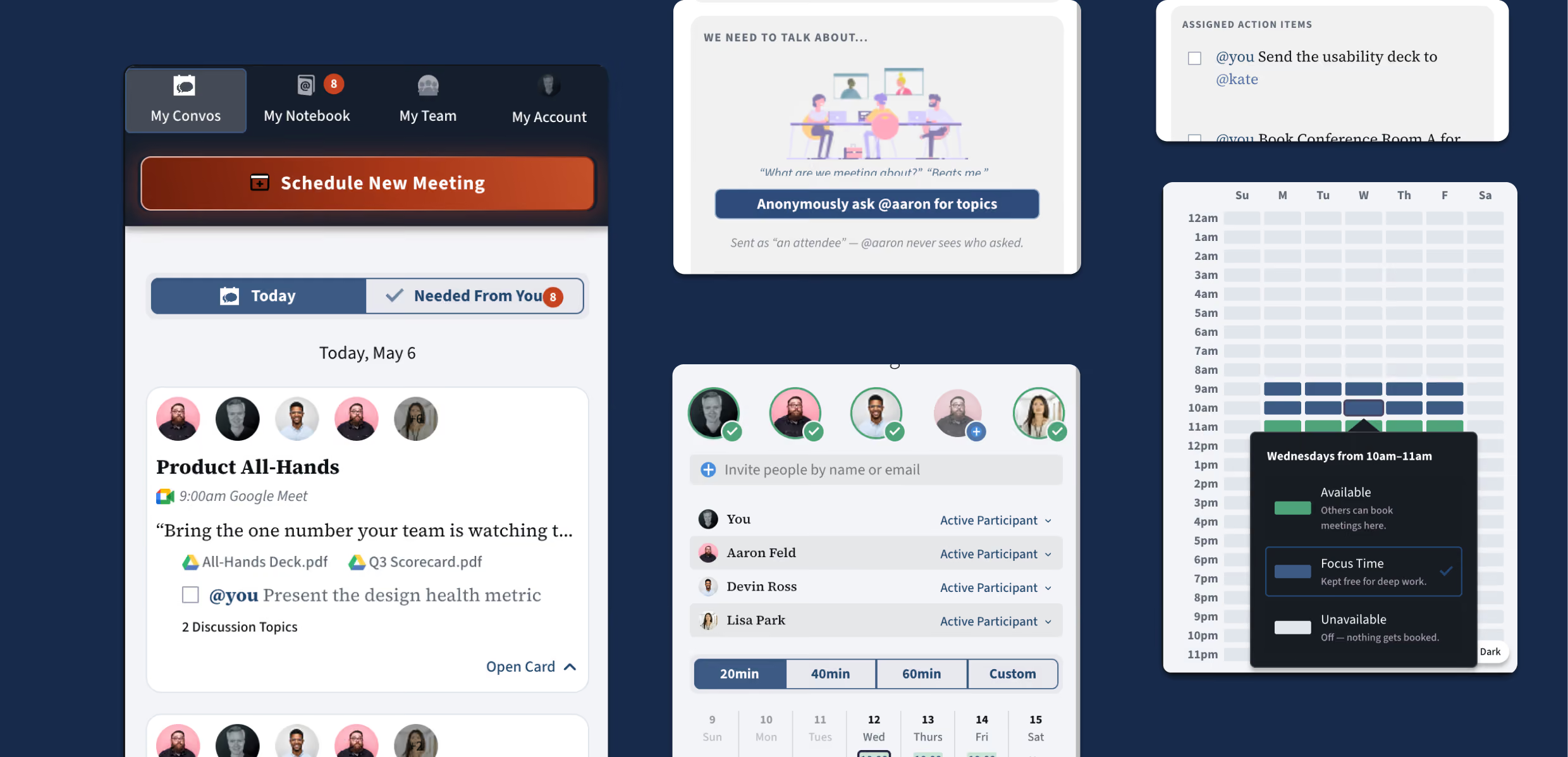
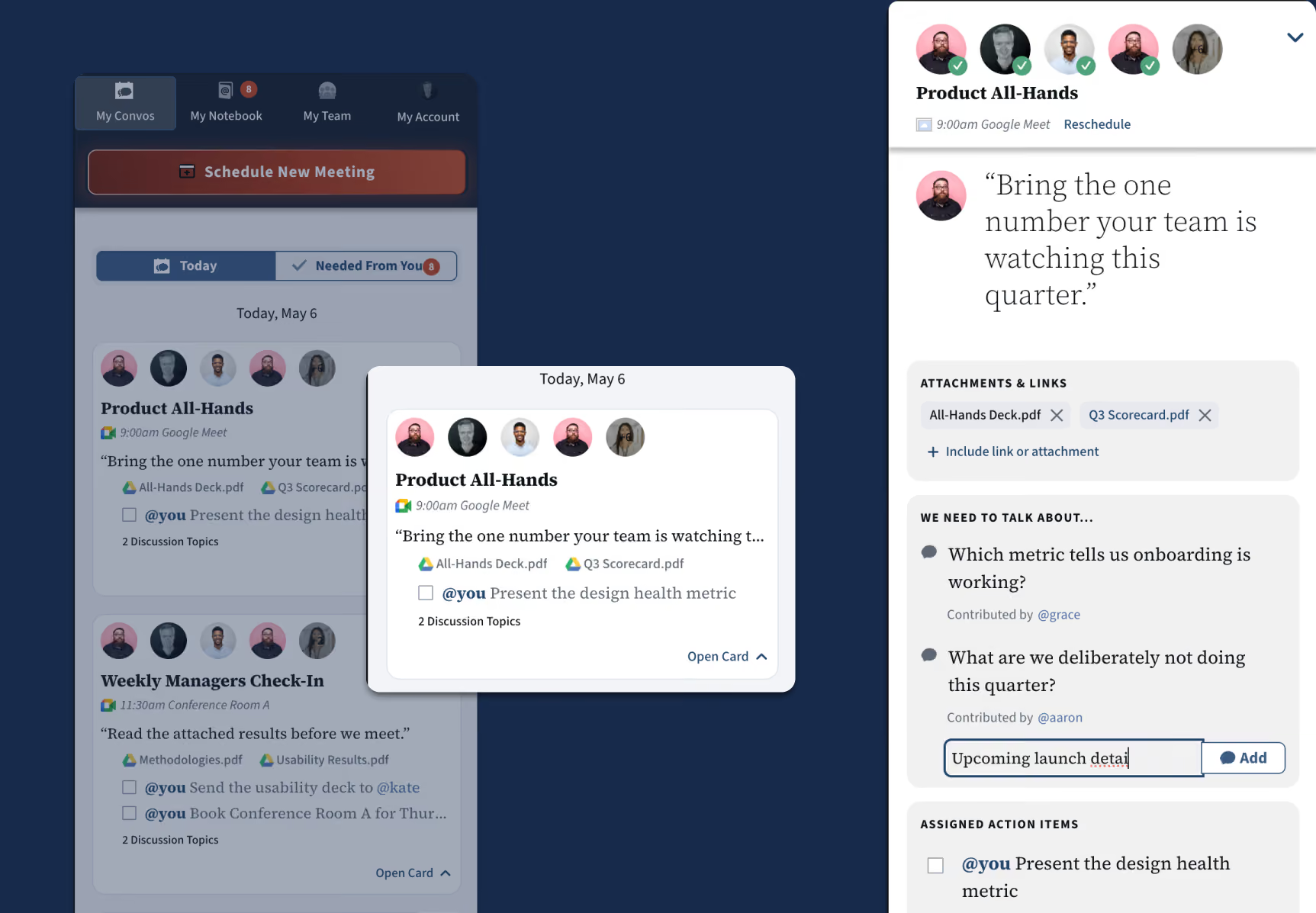
Everything orbits one object. A card per meeting, created automatically when the meeting is scheduled, shared automatically with every attendee, editable by anyone on it — discussion topics, action items, attachments, private notes, and any pre-work the owner assigns. The word “agenda” appears nowhere in the product. It tested badly in every interview where I used it, and the objection was overhead: people heard another document they’d have to write before every meeting. The card had to arrive already made. After the meeting it moves into a private Notebook, where attendance does the filing, since notes are only valuable if you can find them three weeks later and nobody files anything.
Product StrategyContent OrganizationInfo Architecture
Designed For Teams and Solo Use
The most consistent question in interviews had nothing to do with meetings. Does my boss have to approve this? Will IT see it? Does my manager get notified when I install it? Every version of the same question, about whether connecting a work calendar to an outside tool is something you’re allowed to do quietly. So Aligned worked in both directions. A manager could roll it out top-down, and one person could install it bottom-up and get full value alone without anyone else in their org knowing. Every feature had to degrade gracefully to a single user. The card had to be worth something when you were the only person on it. Right call for adoption. It’s also the reason nobody paid, which I’ll come back to.
Product StrategyUser Experience Design
Discouraged Beats Forbidden
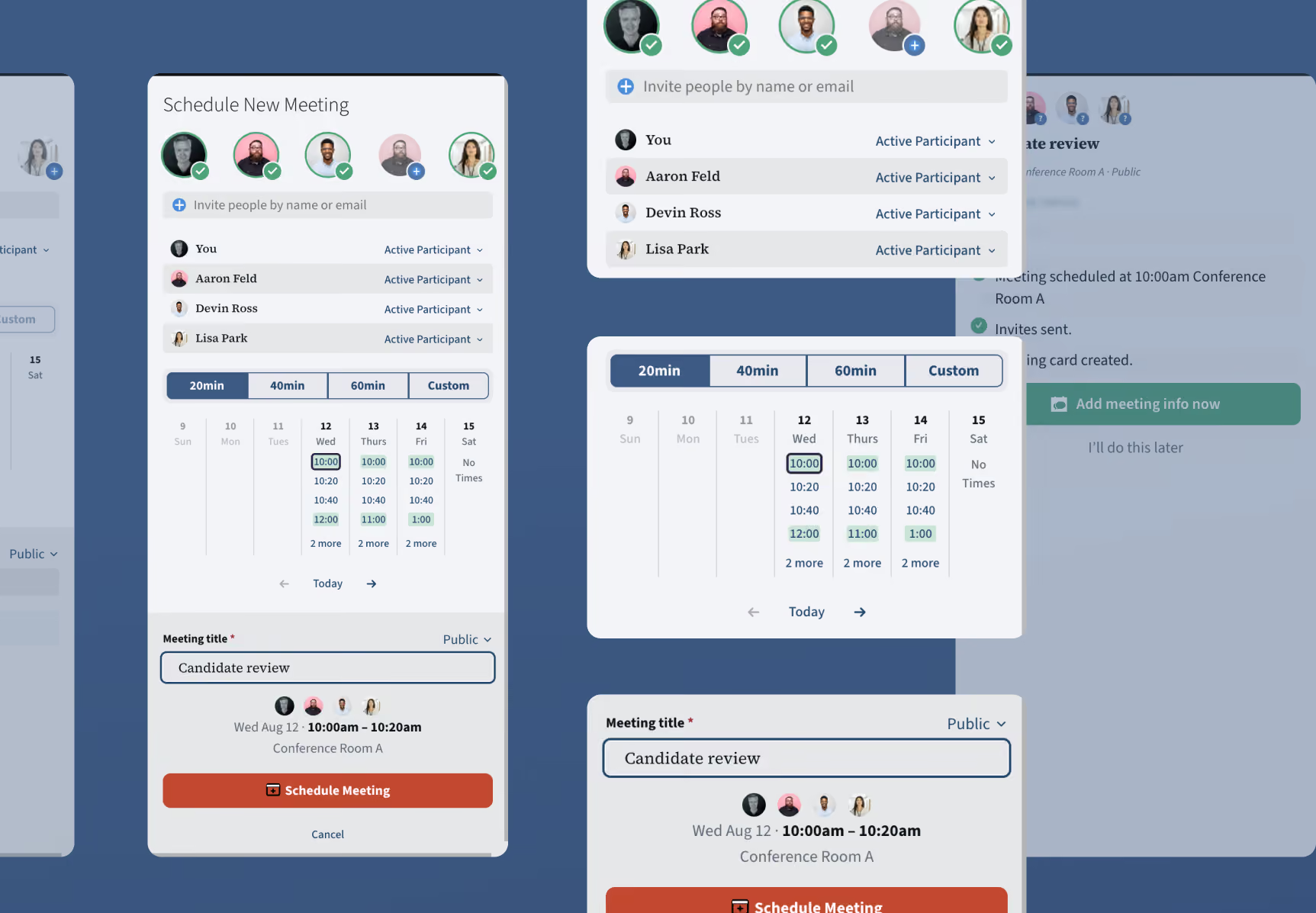
Finding a time for six people means opening six calendars and doing arithmetic, and the answer you land on is “technically available,” which isn’t the same as a good idea. The scheduler read every invitee’s calendar and focus preferences and ranked times for the group, least disruptive first. It wouldn’t book over an existing meeting. It would book over focus time — deprioritized, and flagged with a count of how many people you’d be interrupting. The cleaner design was a hard block, and I wanted it for a while. What talked me out of it was position. Aligned was a guest in Google Calendar, and the moment a tool tells you no, you close it and go back to the one that doesn’t. Discouraged beats forbidden, because forbidden gets uninstalled. One smaller call I can’t support: twenty-minute default meetings instead of thirty, on the reasoning that thirty invites filler and fits two into an hour while twenty fits three. Nothing ever came back about it — no complaints, no requests to change it. That’s not evidence it was right. It’s the absence of evidence it was wrong, which is the weakest thing I’d accept from anyone else.
User Experience DesignUser Interface DesignVisual Design
Transparency and Anonymity Operate on Different Objects
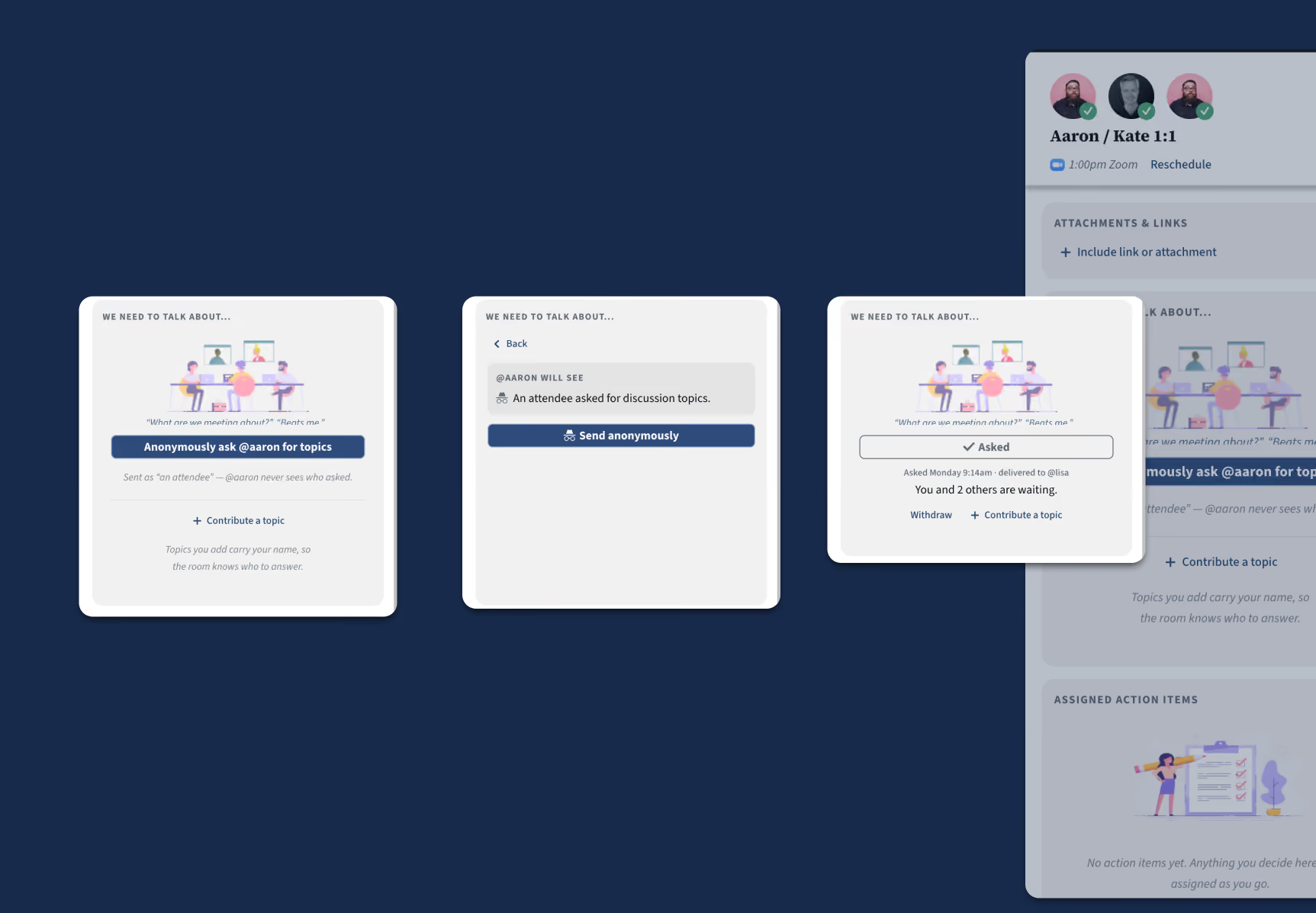
People wanted to ask for discussion topics far more often than they were willing to be seen asking. Walking into an unprepared meeting is annoying. Publicly implying your manager didn’t prepare is a bill you pay later. So the empty state splits by role. The owner gets a low-ceremony inline prompt to add topics. Everyone else gets something the owner never sees: the ability to request a topic with no name attached. The owner receives a request, not a requester. Transparency and anonymity aren’t opposites — they operate on different objects. You can be completely transparent about what changed while staying silent about who changed it. So the attribution rules run in opposite directions. Contributed topics get marked as added by an attendee, because the owner needs to know the list they set isn’t the list on screen anymore. Requests stay anonymous permanently, including in the archive. The microcopy carries the guarantee outright. The confirmation doesn’t say “Request sent.” It says the request was sent and the person’s name isn’t attached to it. A privacy promise a user has to infer is not a promise, because in most workplace software the pessimistic reading is the correct one and users know it.
User Experience DesignUser Interface DesignVisual Design
Action Items
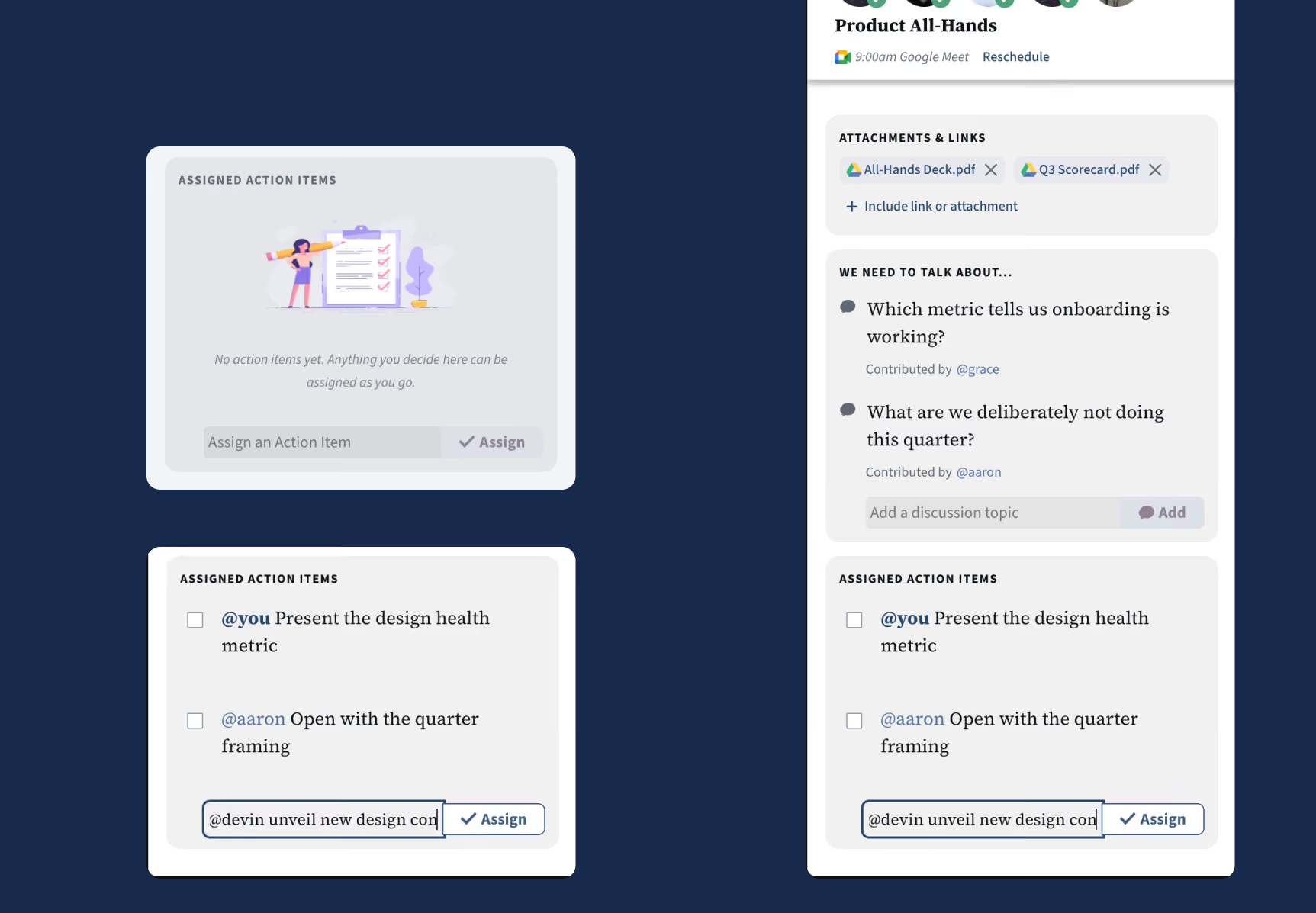
Every meeting tool eventually grows a task system and loses to Asana, Jira, or whatever the team already argues about. Building toward that was the fastest available way to ruin the product. The failure I was looking at was narrower: a commitment made out loud at 2:15 has no record by 2:45. So an action item got scoped as a commitment made in a meeting rather than a task in a project — created on the card, assigned to any attendee, permanently attached to the meeting that produced it. Two states, open and done. No due dates, no status pipeline, no priority field. Assignments rolled up across every meeting into one dashboard, grouped so each item kept its origin. Permissions here run opposite to the rest of the product. Anyone can assign an item to anyone, including up the org chart, and that assignment is always attributed, since you should be able to see who handed you the thing. My impression was that most assignments were people giving items to themselves, which is “I’ll take that” with a record attached. I never measured it.
User Experience DesignUser Interface DesignVisual Design
A Copy Change That Read as a Policy Change
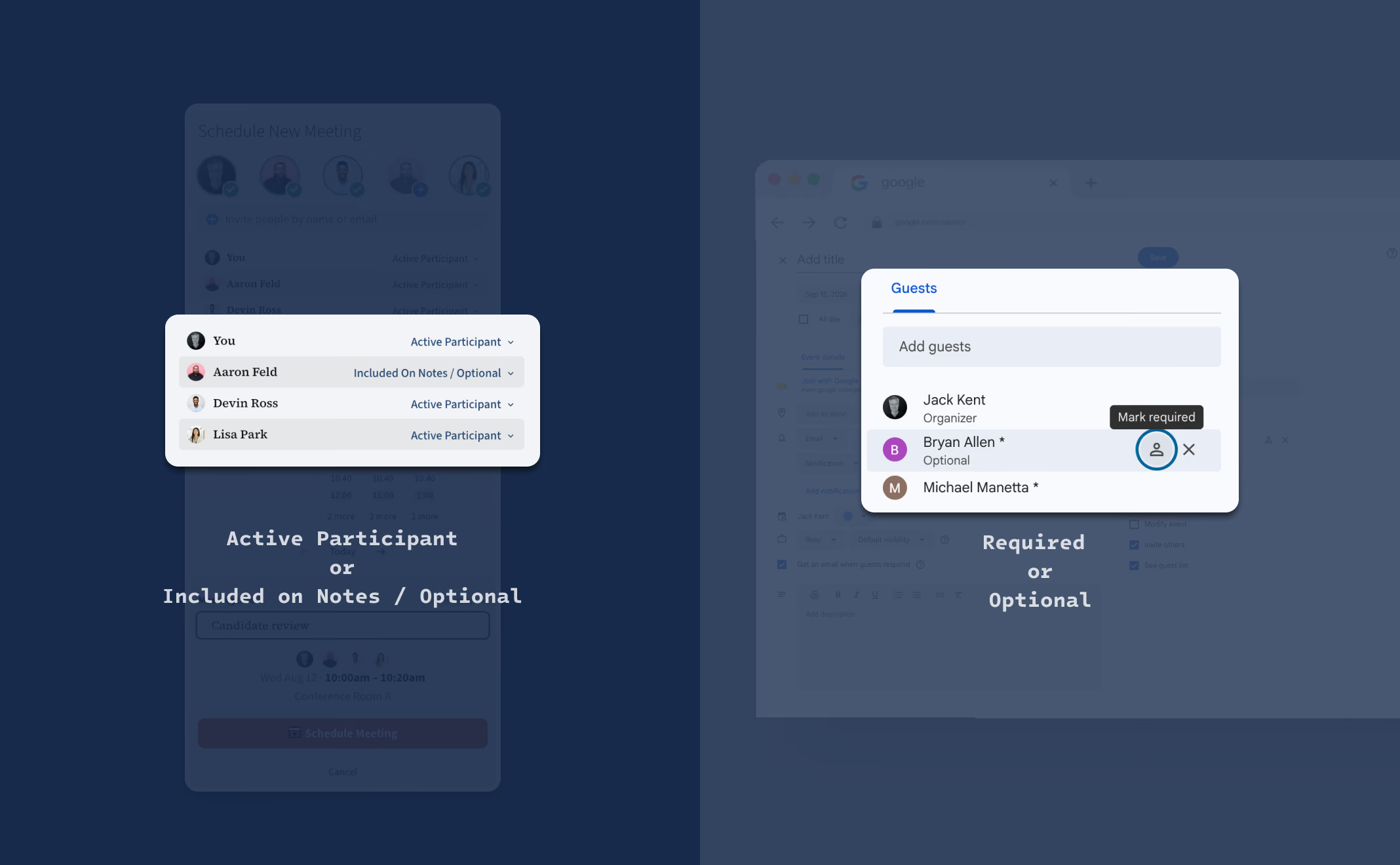
Google Calendar gives you required or optional. Both are judgments about you rather than descriptions of the meeting, and optional in particular reads as a courtesy invitation to something you don’t matter to. Aligned renamed them. Required became “active participant.” Optional became “included on notes.” Permissions are identical on both sides — included on notes still means full access to the card, before, during, and after. Nothing functional changed. People in interviews reacted as though something had. The complaint about being marked optional had never been about access. It was about what the label said to the rest of the room, and the label was the cheapest thing in the product to change. Smallest piece of work in Aligned, and the one I’d point at first if someone asked what design was doing here that a spec couldn’t.
The Notebook
The problem. Meeting notes are only valuable if someone can find them three weeks later, which requires filing, which nobody does.
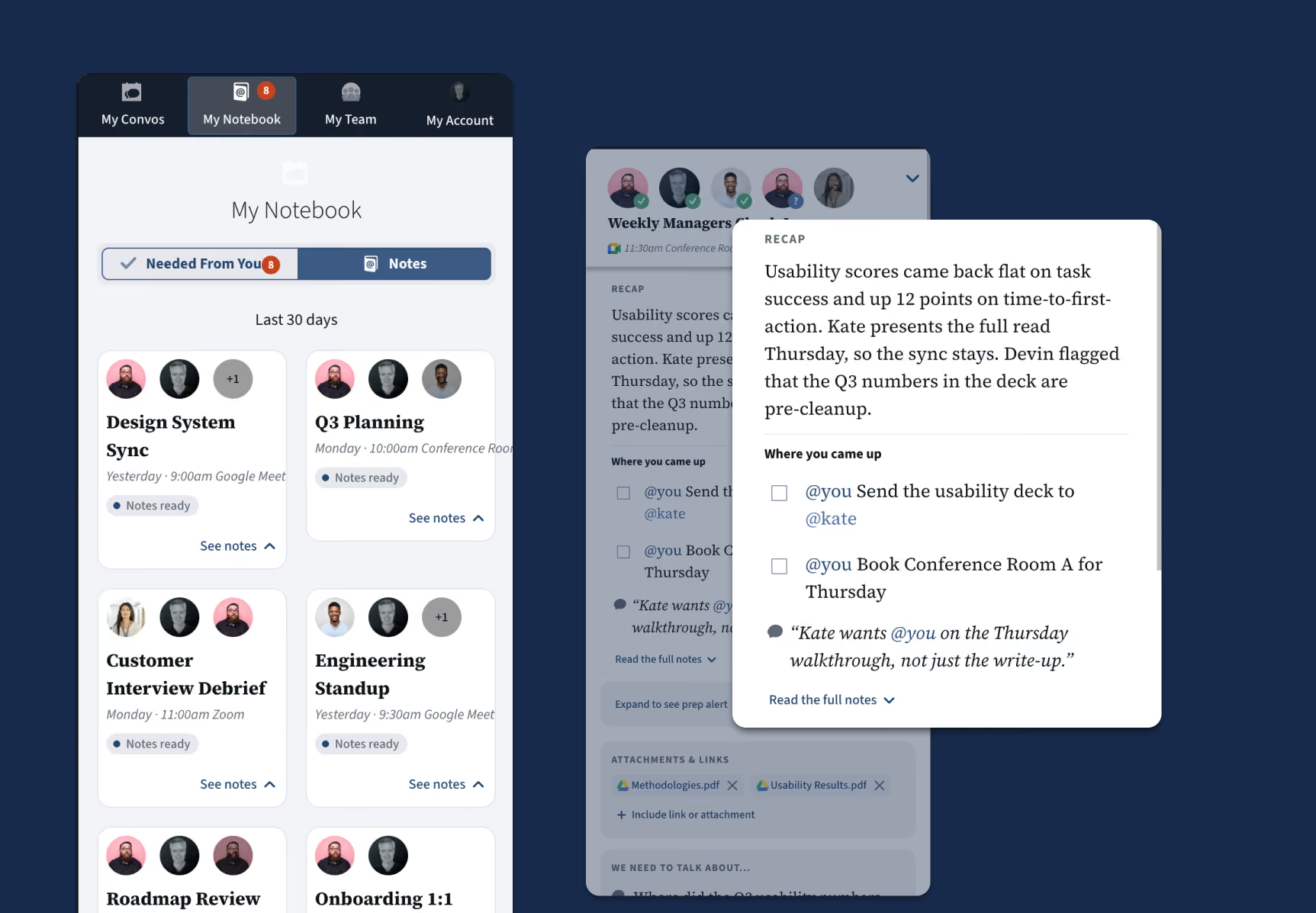
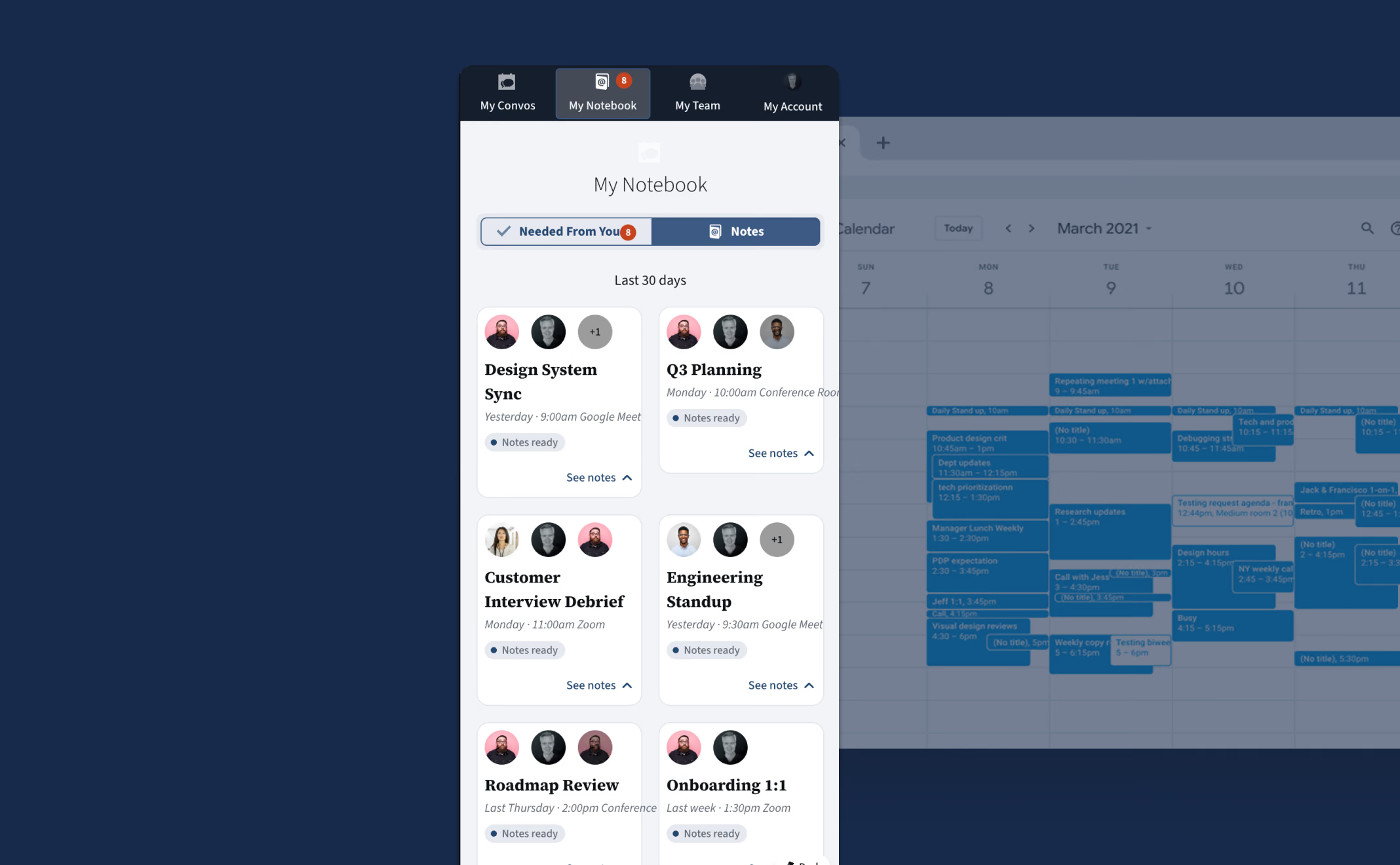
The call. When a meeting ends, its card moves into My Notebook for every attendee — topics, action items, attachments, notes, intact. Attendance is the filing system.
Design note. This is the feature that makes the rest of the product worth using twice. Everything before it improves one meeting. This one makes the meetings accumulate into something.
User Experience DesignUser Interface DesignVisual Design
What Happened
Several months of research and validation before I wrote a job post. A few more finding an engineer, and the first hire was wrong — remote, which hid flags I’d have caught in a room, and obvious inside of a few weeks. I ended it fast and started over. Then several months on the React application the product would run on, and a couple more building the Chrome extension and wiring it into Google Calendar. The extension, the card, and we were ready to send Beta invites out in early 2020. Then COVID, right as we were getting to market, about the midpoint of the company’s life. Every assumption about meeting culture and protected focus time got renegotiated inside of a week. The largest thing we didn’t ship was an integration into the Google Calendar interface itself — Aligned rendering inside the native calendar rather than alongside it. Technically it meant building against a surface we didn’t own and couldn’t rely on staying put. Design-wise it meant working inside someone else’s grid, type scale, and interaction model, with very little room to make anything read as ours without making it read as broken. We reworked it repeatedly, never got a version worth shipping, and cut it after losing a lot of time. We continued to operate throughout the rest of 2020, struggling to show enough traction to be excited about. I closed the company deliberately in 2021 rather than let it run another two years on momentum.